Hardware Efficiency Emerges as the Common Thread in Today's Advances

Across space, quantum computing, AI infrastructure, and robotics, today's developments reveal a shared ambition: doing more with less by rethinking the physical and computational substrate beneath ambitious technologies.
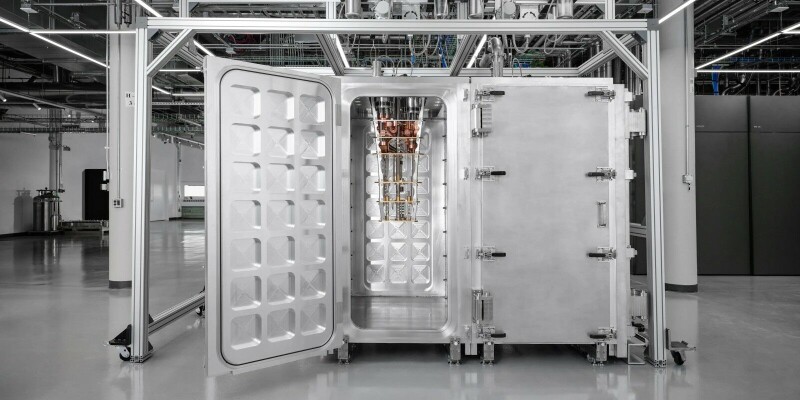
The pattern is clearest in hardware design. China's LandSpace successfully landed a reusable rocket first stage, following the economic logic that drove SpaceX's revolution—why discard expensive hardware after one use? Meanwhile, IBM introduced modular cryogenic cabinets connected by 'cryogenic tunnels' to pack quantum processors more densely, replacing bulky cylindrical designs with space-efficient rectangles. Both advances prioritize reusability and smarter physical layout to make costly systems sustainable at scale.
Software efficiency mirrors this trend. NVIDIA's Cosmos 3 Edge brings a 4 billion parameter world model directly onto robot hardware, eliminating the latency and cost of cloud dependence for adaptive control. On the web development side, React Compiler in Next.js now automates render optimization, removing the cognitive overhead developers once handled manually with memoization hooks. And DeepSeek's open-source agent runtime offers a modular, micro-kernel architecture that lets builders assemble AI agents from composable parts rather than monolithic frameworks.
The through-line isn't a single technology but a shared constraint: as ambitions grow—orbital reuse, fault-tolerant qubits, embodied AI, complex web apps—the path forward depends on eliminating waste, whether that's discarded boosters, excess cooling volume, unnecessary cloud round-trips, or redundant re-renders. Efficiency, it turns out, is the prerequisite for the next leap in scale.
The stories this essay is drawn from, ranked by Impact and Innovation.
TechnologyChinese space startup LandSpace successfully landed the first-stage booster of its Zhuque-3 rocket on land after reaching orbit, marking progress toward reusable rocket technology.
 Technology
IBM unveiled smaller, modular rectangular cryogenic cabinets designed to enable quantum computers to scale by providing more efficient cooling and space optimization compared to their previous round designs.
 Top Engineering Blogs
NVIDIA released Cosmos 3 Edge, a 4 billion parameter on-device world model that enables robots to learn and adapt policies on their onboard hardware without requiring cloud compute.